The CryoVault is a specialized research-driven biobank focused on preserving the genetic diversity of African rhinoceroses by collecting and storing viable biomaterials.
The main goals are to secure samples from as many individual rhinos as possible while developing field-ready assisted reproductive technologies (ART), fostering scientific collaboration and training, and enabling the future use of these materials to support at-risk populations.

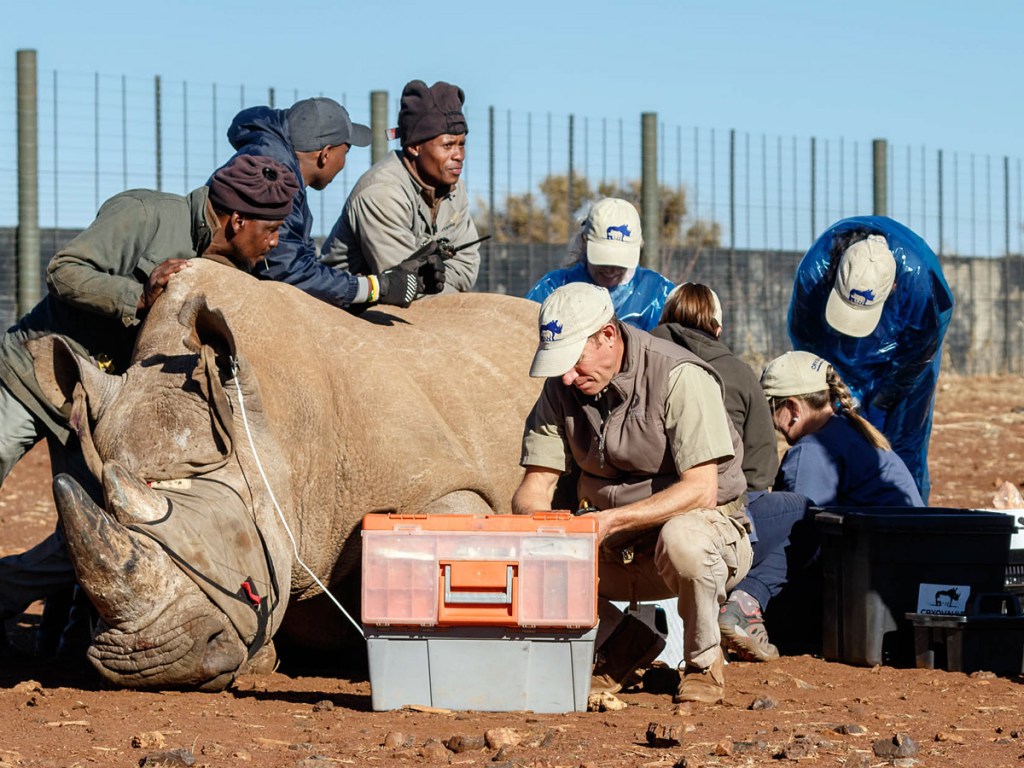
Since 2018, the CryoVault team has collected and cryopreserved semen and other biomaterials from African rhinoceroses, aligning this work within the timeframe of routine wildlife management interventions like dehorning and ear-notching, which require chemical immobilization.
As a result, efficient, field-ready procedures and equipment, and optimised immobilization protocols to support these efforts have been developed. Over 40 black and white rhinoceroses—both free-ranging and game-farmed—have contributed viable semen samples, along with tissue, whole blood, serum, and seminal plasma.
Since 2021, in collaboration with the University of Pretoria, the Cryovault performs ovum pick-up (OPU) to collect oocytes from more than 40 female white rhinoceroses, for in vitro production of embryos as part of advanced conservation strategies.
Our long-term aim is to advance ART and achieve embryo transfers with in vitro-produced rhinoceros embryos. All activities are thoroughly documented and have contributed to peer-reviewed research (see “Rhino Publication List”).

Background
Human population growth and environmental pressures, including habitat loss and fragmentation, are driving severe declines in global biodiversity. Rhinoceroses are particularly impacted by habitat loss and poaching for rhino horn, with wild populations rapidly decreasing. The black rhinoceros has declined by 97.6% due to poaching, the northern white rhinoceros is functionally extinct with only two females remaining under protection, and the southern white rhinoceros, though once recovered, now faces renewed threats to its survival.
Protecting rhinoceros populations in their natural habitats is central to conservation, aiming for growth through natural breeding. Yet, closed populations face challenges with genetic diversity, traditionally addressed by translocation of unrelated individuals—a process that is often complex, costly, and risky, with limited numbers and reduced reproductive success due to relocation stress.
Preserving reproductive materials—gametes, embryos, and tissues—from both living and deceased animals enables assisted reproductive technologies (ART) like artificial insemination and embryo transfer, enhancing genetic diversity without moving animals. While ART in wildlife requires species-specific protocols and faces logistical challenges, successful rhinoceros births from AI in captivity show its promise.
With wild populations declining, urgent action is needed NOW to collect and preserve viable biomaterials. Establishing genetic repositories now is vital for the resilience and future recovery of rhinoceros populations.

 Hemmersbach Rhino Force