Equine IVF Pregnancies
December 2025 – Together with our partner, the University of Pretoria, we have achieved a major milestone: South Africa’s first successful equine pregnancies with in vitro derived embryos!
By bringing advanced assisted reproductive technologies into local practice, our project achieved three confirmed pregnancies following transfer of ICSI embryos – a first for the country and a significant step forward for veterinary reproductive science in the region.

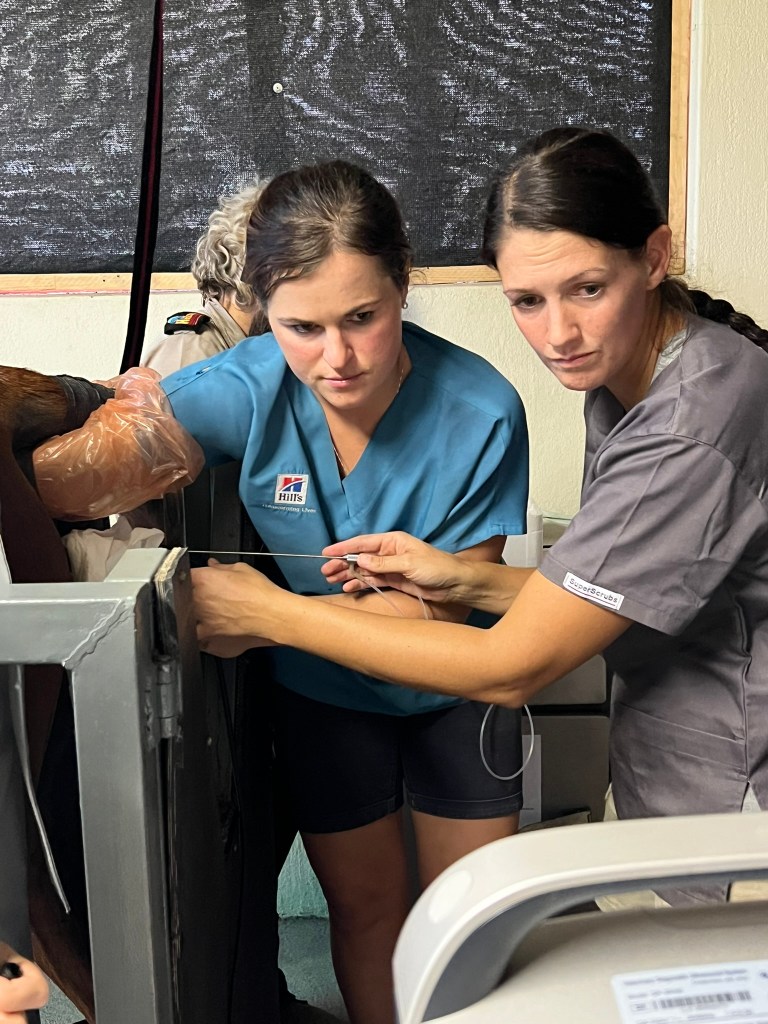
For our team, however, this achievement extends far beyond equine reproduction. Owing to similarities in reproductive physiology and the shared challenges of embryo culture, the horse serves as a highly valuable model for the development and validation of advanced assisted reproductive technologies for African rhinoceroses. As such, this success directly supports our long-term conservation goal of adapting and implementing these techniques to aid threatened African rhinoceros species.
In both horses and rhinoceroses, intracytoplasmic sperm injection (ICSI), rather than conventional in vitro fertilisation, is the preferred and most reliable method for in vitro embryo production. ICSI involves the injection of a single, selected spermatozoon directly into a mature oocyte.
Throughout 2025, following specialised training and guidance from veterinarians at Ghent University, our team routinely collected equine oocytes. These were transported to the In Vitro Fertilization Laboratory within the Faculty of Veterinary Science, where they underwent in vitro maturation followed by ICSI using frozen–thawed sperm. The resulting embryos were cultured to the blastocyst stage. In November, five blastocysts were transferred into recipient mares, leading to three confirmed pregnancies, with live foals expected in October 2026.
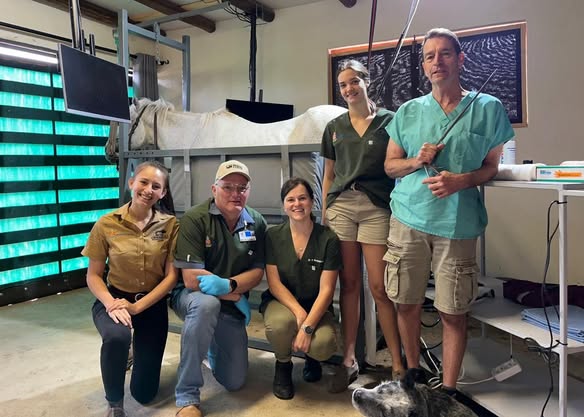

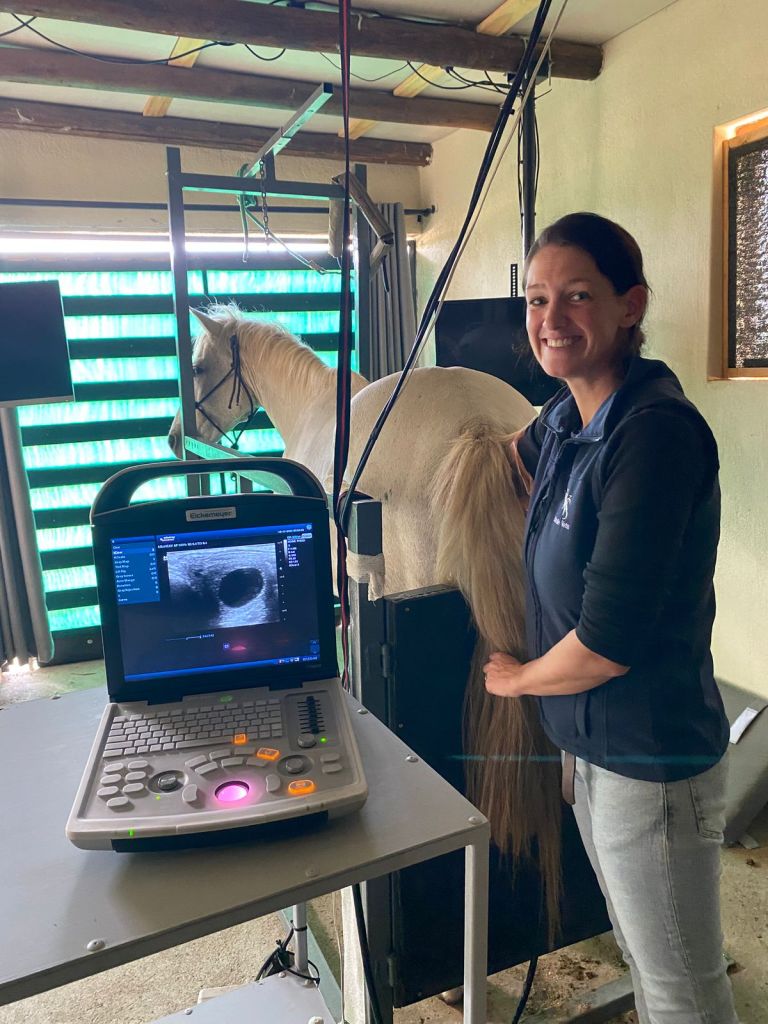
The specialist expertise, technical skills, and laboratory infrastructure developed during this project, together with refined protocols for oocyte handling, fertilisation, embryo culture, cryopreservation, and embryo transfer, provide a robust foundation for further advancing assisted reproductive technologies in rhinoceros conservation.
This research project was funded by Hemmersbach Rhino Force and the Faculty of Veterinary Science’s In Vitro Fertilization Laboratory. It was conducted through collaboration with embryologists Jana van Selms and Mario Smuts, and veterinarians Dr Janine Meuffels-Barkas, Dr Su-Mari Hoogenboezem, Dr Maria Melchert, and Prof Martin Schulman, with support from Prof Dietmar Holm. Special thanks are extended to Dr Brendan Tindall for the collection and provision of additional oocytes, and to international collaborators Dr Katrien Smits, Dr Jan Govaere, Dr Cyriel Ververs, Dr Imke Wiemann, and Dr Jess Briner for their invaluable expertise and support.

Rifa – The Zambezi Valley Project
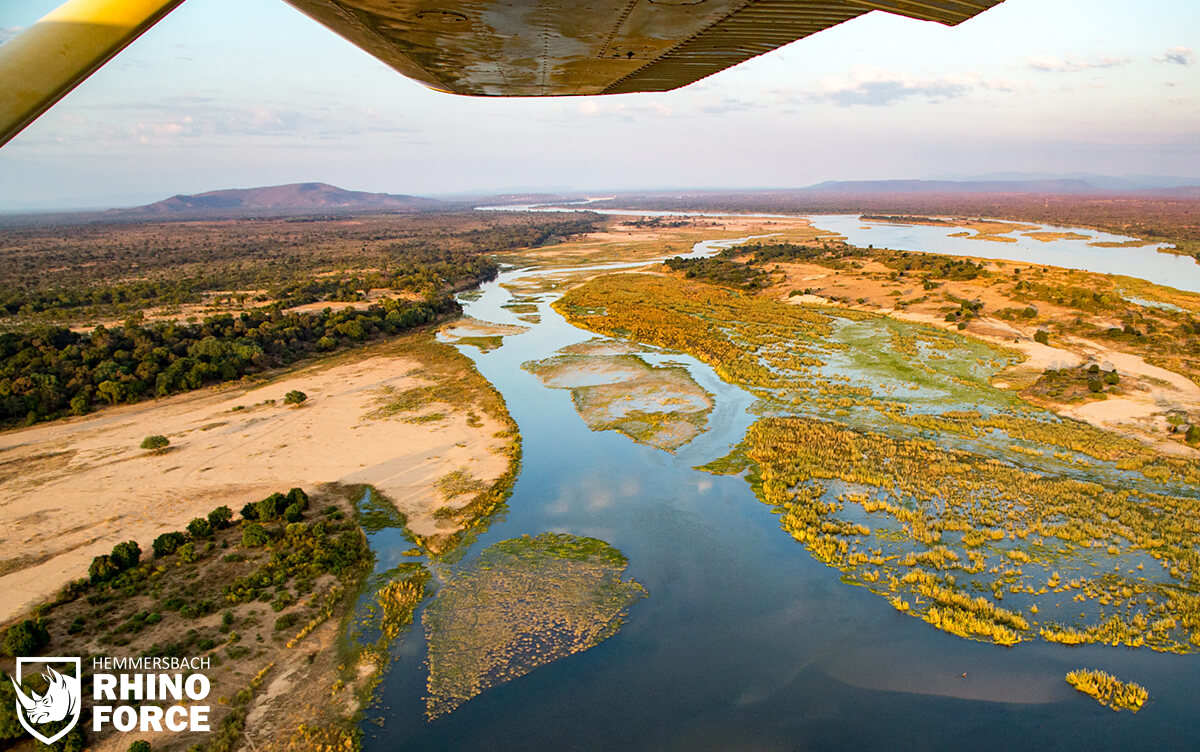
May 2023 – During the last 5 years, we successfully converted the 600 km² Rifa concession from a hunting to a non-hunting area and a true wildlife paradise. Implementing anti-poaching measures and improving infrastructure allowed the wildlife population to recover, increase and thrive. The successful relocation of 100 rescued elephants added to the area’s bio-diversity – and we are happy to report that they are prospering as well.
It was always our main mission to re-introduce the black rhino to the Mid Zambezi Valley. But after careful consultations with rhino experts and conservationists in Southern Africa, it unfortunately turned out that Rifa is not the ideal place for us to achieve this goal. Hemmersbach Rhino Force will be using this time and funding to further our work across other protected areas specifically focused on the safeguarding of rhino. That’s why we started looking for a sustainable alternative for this amazing area.
Today, we are happy and excited to announce that we found the ideal partner, Stephen Cunliffe and his Natural Capital Foundation, to take the next phase of Rifa´s development. As an organisation dedicated to the protection of wilderness through investment into conservation, Natural Capital will fulfill the ambitious task of building on Rhino Force´s work and achievements in Rifa and the Zambezi Valley.
This step will allow us to focus even more on our main task – protecting the African rhino from extinction – with our other projects in South Africa and Zimbabwe. And it will ensure that Rifa stays the paradise and safe haven for wild animals that it is today: a priceless natural asset of immeasurable value for wildlife, the planet and future generations.
Learn more about our other projects at www.rhino-force.org/projects and everything about Natural Capital and their important work at https://www.naturalcapital.earth/home
One Hundred Elephants Relocation In Zimbabwe
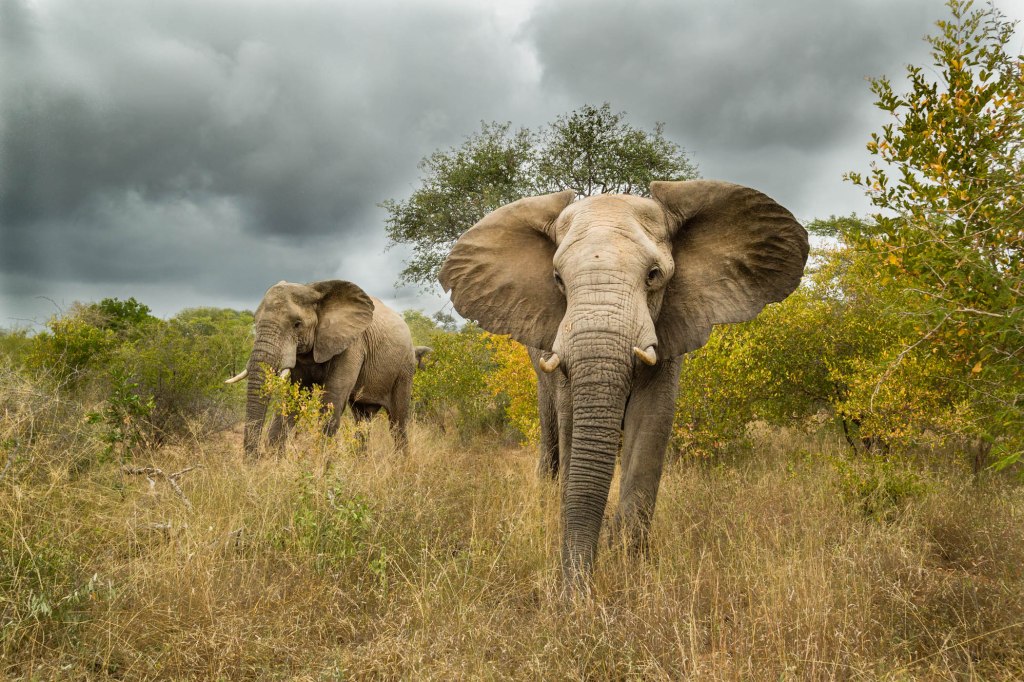
Between September and October 2018, we carried out one of the largest elephant relocations in history, saving 100 wild elephants from being culled. The animals were transferred from the overpopulated Sango Wildlife Conservancy to their new home in the Rifa Safari Area, over 700 km away in northern Zimbabwe.
With the full support of the Government of Zimbabwe and under the direction of the Zimbabwe Parks & Wildlife Management Authority, this monumental conservation effort was led, executed, and fully funded by Hemmersbach Rhino Force as part of our ongoing mission to protect endangered wildlife.
Wilfried Pabst, owner of the 231-square-mile Sango Wildlife Conservancy, explains: “We simply have far too many elephants on Sango. Thanks to Hemmersbach Rhino Force, we were able to avoid the unimaginable – a cull – and instead give these animals a new life in the wild.”
The elephants were relocated as a wildlife donation into the Rifa Safari Area, a 309-square-mile reserve operated by Hemmersbach Rhino Force in the Zambezi Valley. Our CEO, Ralph Koczwara, welcomed this action as “a powerful demonstration of what’s possible when decisive conservation meets operational capability.”
This relocation marks the first phase of a long-term conservation strategy, in collaboration with the Government of Zimbabwe and our partners. Future stages will focus on the reintroduction of plains game and highly endangered black rhinos from the Sango Wildlife Conservancy – reinforcing our commitment to restoring ecosystems and reversing species decline across Zimbabwe.
 Hemmersbach Rhino Force